How to shut off your water main in an emergency
A burst pipe can dump 10 gallons a minute. Here's exactly how to shut off your water main in an emergency in Newark NJ, where the valve hides, and what to do next.
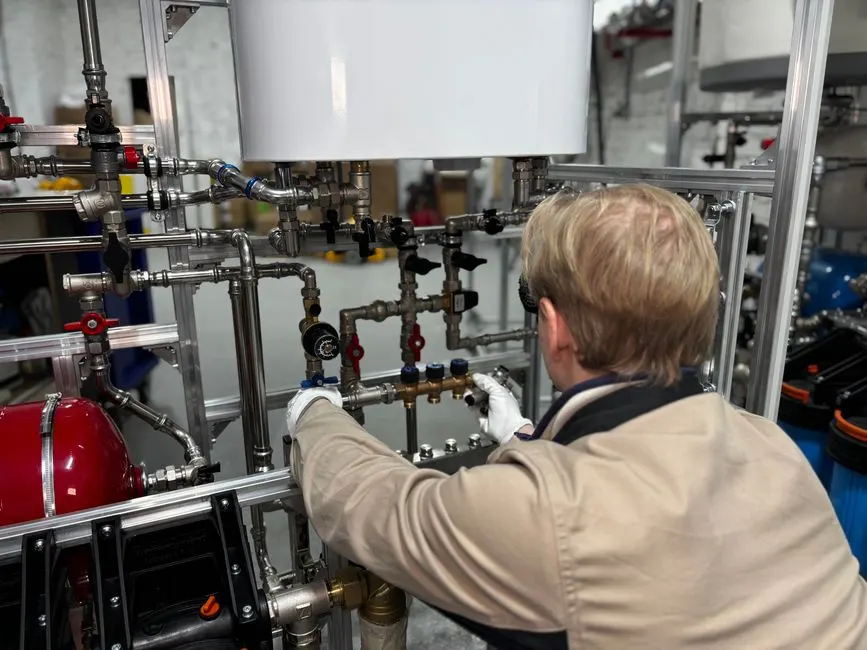
To shut off your water main in an emergency, turn the main shutoff valve clockwise until it stops - a ball valve handle goes a quarter turn, a round gate wheel takes five to seven full turns. Do it before you do anything else, because a burst half-inch supply line can push 10 to 20 gallons per minute into your floors and walls. This guide covers where that valve hides in Newark homes, the tools that work on old brass fittings, and what to do in the first thirty minutes after the water stops.
Find your main shutoff valve before you need it
Your main shutoff valve is the single control point between the city water supply and every pipe, toilet, and faucet in your building. In Newark, that valve sits in one of four places: the basement near the front foundation wall, a ground-floor utility closet, a curb-side meter pit, or - in newer construction - a mechanical room. Knowing which one you have takes two minutes now and saves twenty minutes of panic later.
Walk your building this week. Find the valve, tag it with a zip tie or a piece of red tape, and make sure nothing is stacked in front of it. In Newark's older housing stock, we regularly find shutoff valves buried behind water heaters, storage boxes, and even drywall that a previous owner installed over the access panel.
Two kinds of valves show up in Newark buildings:
- Ball valve - a lever handle. Quarter turn clockwise to close. The handle ends up perpendicular to the pipe.
- Gate valve - a round wheel. Five to seven full clockwise turns. If it hasn't been turned in years, it may stick; use a valve wrench, not pliers.
If you own a multi-family or you're a landlord managing several units, we handle Water Damage Restoration across Newark and can walk your building with you to map every shutoff point before a problem hits.
How to shut off the water main step by step
Shutting off the water main in Newark New Jersey follows the same sequence whether you're in a Forest Hill colonial or a downtown high-rise. Work fast, but don't force anything - a snapped valve stem turns a leak into an open pipe.
- Kill the water heater. If it's gas, turn the dial to Pilot or Off. If electric, flip the breaker. A drained tank with the burner still running can crack the tank.
- Turn the main valve clockwise. Ball valve: quarter turn. Gate valve: five to seven turns until it seats.
- Open the lowest faucet in the building. A basement slop sink or laundry tub. This drains residual pressure so the leak slows immediately.
- Open a second faucet upstairs. This pulls water out of the upper lines and stops the ceiling drip.
- Confirm the meter has stopped. If you have a visible meter, watch the dial for 60 seconds. Any movement means water is still coming through.
If the leak is coming from a supply line under a sink or behind a toilet, close the angle stop first - that's the small oval handle on the wall. It buys you time to reach the main. For a fixture-level emergency like a toilet that won't stop running, our toilet overflow cleanup Newark NJ team handles the water and the drying in one visit.
Where is my water main shut off valve in Newark New Jersey?
In Newark, the main shutoff valve is almost always on the street side of the basement, within 3 to 6 feet of where the water line enters through the foundation. That's the rule for the city's pre-1950 two- and three-family homes, which make up most of the housing in the Ironbound, Weequahic, and Vailsburg.
Here's where to look, in order:
- Basement, front wall. Look low, near the floor, where the copper or galvanized line comes through the stone or block.
- Under the front steps. Some Newark homes have a small access panel here.
- Utility closet on the ground floor. Common in downtown conversions and newer builds near University Heights.
- Curb box outside. A round metal lid near the sidewalk. You need a curb key to reach the valve - a 4- to 6-foot T-handle tool sold at any hardware store for $25 to $45.
If you can't find it, call the Newark Water and Sewer Department at (973) 733-6370. They can confirm whether your service has a curb-side shutoff and whether it's operable. If the curb valve is broken or buried, that's a city-side repair - not something you can fix from inside.
Apartments, two-families, and Ironbound row houses
Renters in Newark apartments usually can't shut off the whole building - and shouldn't try. If you're in a unit, your first move is the angle stop under the sink or behind the toilet. That kills water to the fixture without touching the building main.
If the leak is coming from a wall, ceiling, or the unit above, call your landlord or building superintendent immediately. In a two-family, each unit often has its own shutoff in the basement, but the valve may serve both. Turning the wrong one can leave a neighbor without water - which is legal in an emergency but creates a headache you don't want.
Ironbound row houses add a wrinkle: shared walls mean a leak in one unit can wick into the next through the party wall. We see this often in the older brick buildings off Ferry Street, where a slow supply-line drip in one kitchen shows up as a stain on the neighbor's ceiling two days later. If you're dealing with that kind of cross-unit damage, our Water Damage Restoration in Ironbound crew handles both sides of the wall and documents the source for the insurance claim.
What to do after shutting off the water main in Newark New Jersey
Once the water is off, the clock starts. Mold can begin colonizing wet drywall in 24 to 48 hours, and Newark's humid summers push that closer to the 24-hour mark. Here's the sequence that limits damage:
- Photograph everything. Wide shots of the room, close-ups of the source, and a shot of any standing water with a ruler or coin for scale. Your insurance adjuster will ask.
- Shut off electricity to wet areas. Only if you can reach the breaker panel without stepping in water. Otherwise, call an electrician.
- Pull up what you can. Rugs, cardboard, papers, and anything sitting on the wet floor. Leave carpet and pad for the pros - pulling them wrong spreads contamination.
- Start air movement. Box fans and open windows help, but they don't dry a wall cavity. That takes commercial dehumidifiers and air movers.
- Call a water damage company the same day. Extraction within the first few hours is the difference between a $1,800 dry-out and a $12,000 rebuild.
Typical 2026 pricing in Newark for emergency water extraction runs $500 to $1,500 for a single room, and $2,500 to $6,000 for a full basement. Structural drying adds $1,200 to $3,000 depending on square footage and how long the water sat. If you're looking at a flooded lower level, our basement flood cleanup Newark NJ service includes extraction, drying, and moisture verification before we close the job.
Common mistakes that turn a leak into a flood
The most expensive water damage calls we run in Newark share the same three or four mistakes. Avoid them and you'll cut your repair bill in half.
- Turning the valve the wrong way. Clockwise closes. Counter-clockwise opens. Sounds obvious until you're standing in two inches of water at 11 p.m.
- Forcing a stuck gate valve. If the wheel won't budge, stop. A snapped stem means water is now flowing freely and the only fix is the curb-side shutoff - a city call.
- Shutting off the main but not the water heater. A drained tank with a live burner warps the tank and can cost you $1,400 to $2,200 for a replacement.
- Waiting until morning. Water wicks up drywall at roughly 1 inch per hour. Eight hours of sleep equals 8 inches of soaked wall - past the point where drying alone will save it.
- Skipping the second faucet. If you don't drain the upper lines, water keeps dripping from the ceiling and you'll think the main didn't work.
One more: don't assume the leak is where the water is showing. In Newark's older buildings, water travels along joists and pipe chases before it drops. A stain in the kitchen often traces back to a bathroom two rooms over. That's why we use thermal imaging and moisture meters on every job - guessing costs more than measuring.
When to call a professional
Call us when the water is off but the damage is already done, when the valve won't close, or when the leak is inside a wall or ceiling you can't reach. Those three situations cover about 80 percent of the calls we run in Newark.
We handle the parts most homeowners can't: extracting standing water with truck-mounted units, drying wall cavities without tearing them open, testing for hidden moisture, and treating for mold before it spreads. If the source is a failed supply line or a pinhole in old galvanized pipe, our water leak restoration Newark NJ team finds it, fixes the damage, and confirms the line holds before we leave.
We also work directly with most major insurers, which means you're not chasing paperwork while your floors are wet. One call, one crew, one invoice.
Frequently Asked Questions
How do I shut off my water main in an emergency in Newark NJ?
Turn the main valve clockwise until it stops - a quarter turn for a lever-style ball valve, five to seven turns for a round gate wheel. Then open the lowest faucet in the building to drain pressure. The whole sequence takes under 60 seconds if you already know where the valve is.
Where is the water main shut off valve in Newark New Jersey?
In most Newark homes, it's in the basement on the street side, within 3 to 6 feet of where the water line enters the foundation. In newer downtown buildings, check a ground-floor utility closet. If you can't find it, call Newark Water and Sewer at (973) 733-6370.
What happens if I don't shut off my water main in Newark NJ?
A burst half-inch line releases 10 to 20 gallons per minute. In 30 minutes that's 300 to 600 gallons - enough to soak through a floor, ruin a ceiling below, and start mold within 24 to 48 hours. Extraction costs climb fast after the first hour.
Who do I call after shutting off water main in Newark New Jersey?
Call a licensed water damage restoration company the same day. SwiftReclaim handles emergency extraction, structural drying, and mold prevention across Newark. If the valve itself is broken, call Newark Water and Sewer first - that's a city-side repair.
Can I shut off my water main myself in Newark NJ?
Yes, if you can reach the valve and it turns freely. Ball valves and maintained gate valves are homeowner-friendly. If the valve is stuck, buried, or you're in a rental unit without access, don't force it - call a plumber or your landlord.
Get help with Water Damage Restoration in Newark
If the water is already on the floor, the shutoff is step one - drying the building is step two, and it needs to start today. SwiftReclaim handles emergency water removal, structural drying, and mold prevention across every Newark neighborhood, from Downtown to Vailsburg.
Call (973) 973-2565 and we'll be on our way with extraction equipment and moisture meters.