Sewage backup cleanup in Central Ward: health risks and steps
Raw sewage in your Central Ward basement or bathroom is a Category 3 health hazard. Here are the real risks, the cleanup steps, and when to call a pro.
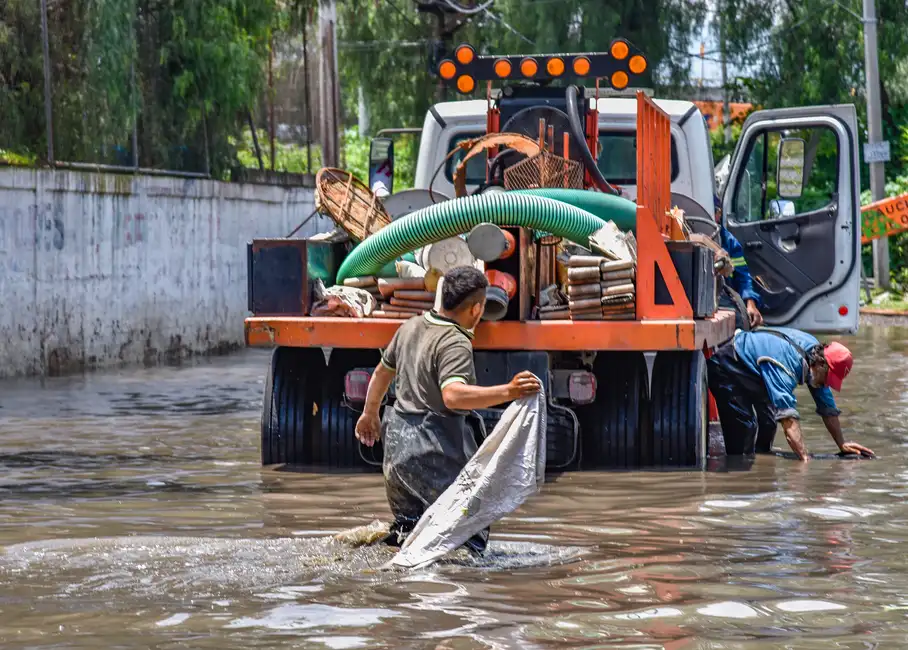
Sewage backup cleanup in Central Ward Newark NJ is a Category 3 water loss - the most contaminated class of water damage - and it needs to be treated as a biohazard, not a mop job. The health risks are real and immediate: E. coli, salmonella, hepatitis A, and norovirus can all be present in the black water that backs up through a floor drain, and those pathogens can make you sick within 24 to 72 hours of exposure. This post covers why backups happen in Central Ward specifically, what the actual health risks are, the step-by-step cleanup process, and when it's time to hand the job to a licensed crew.
Why sewage backups happen in Central Ward
Central Ward sits on some of the oldest combined sewer infrastructure in Newark. The city's combined sewer system carries both stormwater and sanitary waste in the same pipe, and during a heavy rain event - a 1-inch-per-hour downpour, which Newark sees several times each spring and fall - those pipes surcharge. When the main can't handle the volume, the water has to go somewhere, and the lowest opening in your building is usually a basement floor drain, a laundry standpipe, or a first-floor toilet.
The building stock makes it worse. Most of the housing in Central Ward was built before 1950, and a lot of it still has original 4-inch cast iron lateral lines running to the city main. Cast iron pits and scales from the inside out. A 70-year-old lateral that was originally 4 inches in diameter is often down to 2.5 or 3 inches of actual flow capacity. Add tree roots - and Central Ward has plenty of mature London plane and maple - and you have a pipe that backs up on a Tuesday afternoon with no warning.
We also see a lot of shared laterals. Two or three rowhouses on the same block feeding into one undersized line. When one neighbor flushes a wad of wipes or pours grease down the drain, everybody upstream pays for it.
What are the health risks of sewage backup in Central Ward Newark NJ?
The health risks of sewage backup in Central Ward Newark NJ come down to three exposure routes: skin contact, inhalation of aerosolized bacteria, and accidental ingestion. Raw sewage is a soup of human waste, industrial runoff, and whatever else the combined system picked up on the way to your floor. The CDC classifies it as Category 3 water, which means it is presumed to contain harmful bacteria, viruses, and parasites.
Here's what we actually find on these jobs:
- Bacteria: E. coli, salmonella, and Campylobacter are routine. A single gram of sewage can carry millions of colony-forming units.
- Viruses: Hepatitis A, norovirus, and rotavirus survive in sewage for days to weeks depending on temperature. Norovirus can stay infectious on a hard surface for up to two weeks.
- Parasites: Giardia and Cryptosporidium are common in combined systems and are resistant to many household disinfectants.
- Mold: Once the water sits for 24 to 48 hours, mold colonization begins. In a humid Newark basement in July, we've seen visible mold growth in under 36 hours.
The people most at risk are children under 5, adults over 65, pregnant women, and anyone immunocompromised. If you have a baby crawling on a basement floor that flooded last week, that's a genuine hazard - not a hypothetical one.
There's also the structural side. Sewage is acidic and carries dissolved sulfides. Left in contact with concrete, it etches the surface and weakens the slab over time. Left in contact with wood framing, it wicks up the studs and creates a permanent odor problem that no amount of bleach will fix.
Sewage backup cleanup steps Newark NJ homeowners should follow
If you're dealing with an active backup right now, here's the sequence. These are the same steps our crew follows when we roll up on a sewage cleanup Newark NJ call in Central Ward.
Step 1: Stop the source and cut the power
Don't flush anything. Don't run water. If the backup is coming from a floor drain, call the city's sewer department (Newark Water & Sewer, 973-733-6600) and report a main line blockage - if the problem is on the city side, they'll clear it at no cost to you. If the backup is from your own lateral, stop using water entirely until a plumber snakes the line.
Then kill the power to any flooded area at the breaker. Water and live outlets don't mix, and sewage water is conductive. If you can't reach the panel safely, get out and call an electrician.
Step 2: Get people and pets out of the affected area
Close the door. Tape it off if you can. Anyone with open cuts, asthma, or a compromised immune system should stay on a different floor. Pets should be kept away - dogs will drink standing water, and that's a vet bill you don't want.
Step 3: Document everything before you touch it
Photos and video of the standing water, the damaged items, and the source. This is the single most important thing you do for your insurance claim. Get wide shots and close-ups. If you have a sump pump or a floor drain, photograph the waterline on the wall - that's your high-water mark.
Step 4: Extract the standing water - but only if it's safe
If the water is more than an inch deep and covers a large area, this is a job for a truck-mounted extractor. A shop vac will aerosolize bacteria and spread contamination. If you must do it yourself, wear an N95 respirator, rubber gloves, and eye protection, and ventilate the space. But honestly - for raw sewage, call us. Our emergency water removal Newark NJ crew runs truck-mounted units that pull 20+ gallons per minute and dispose of the waste per NJDEP rules.
Step 5: Remove and bag porous materials
Anything porous that touched the sewage is gone. Carpet, pad, drywall up to 12 inches above the waterline, insulation, cardboard boxes, upholstered furniture. Bag it in 6-mil poly and haul it out. Don't try to save it. Don't put it in your regular trash - check with Newark's Department of Public Works for bulk disposal rules.
Step 6: Disinfect hard surfaces
After extraction and demo, hard surfaces get cleaned with a hospital-grade disinfectant. We use an EPA-registered product rated for norovirus and hepatitis A, and we let it dwell for the full contact time - usually 10 minutes. Bleach alone doesn't cut it on porous surfaces, and it doesn't penetrate biofilm.
Step 7: Dry the structure
This is where most DIY jobs fail. You need air movers and dehumidifiers running for 3 to 5 days to bring framing and slab back under 16% moisture content. We use thermal imaging and pin meters to confirm the structure is actually dry - not just dry to the touch. If you skip this step, you'll be calling us in three weeks for mold remediation after water damage Newark NJ.
Common mistakes we see on sewage backup calls
We've walked into hundreds of these in Central Ward, and the same five mistakes show up over and over.
- Using a wet/dry shop vac. It aerosolizes bacteria and turns a 200-square-foot problem into a whole-floor contamination issue.
- Bleach-and-pray. Bleach doesn't kill Giardia or Cryptosporidium at household concentrations, and it doesn't reach into drywall or wood.
- Running the HVAC. If the furnace or AC was running during the backup, the ductwork is now contaminated. We see this constantly in Central Ward rowhouses with basement mechanicals.
- Waiting for the smell to go away. It won't. That smell is hydrogen sulfide and microbial volatile organic compounds. It means the contamination is still there.
- Not filing the claim within the window. Most carriers want notice within 24 to 72 hours. Wait a week and you're arguing about coverage instead of getting paid.
When to call a professional
Call a pro if any of these are true: the water is black or brown, the affected area is larger than 10 square feet, the backup came from a toilet or floor drain (not a clean supply line), the space has been wet for more than 24 hours, or anyone in the home has a compromised immune system.
At SwiftReclaim, we handle sewage backup cleanup in Central Ward and across Newark. Our technicians are trained in IICRC S500 and S520 standards, we carry the extraction and drying equipment to finish the job in one mobilization, and we bill most major carriers directly. We serve the whole city - from Water Damage Restoration in Central Ward to the Ironbound, University Heights, and Downtown. If you're not sure whether your situation qualifies, call us and we'll tell you straight.
Sewage backup prevention Newark New Jersey
You can't stop the city main from surcharging, but you can stop that water from entering your building. Sewage backup prevention Newark New Jersey comes down to three things: a backwater valve, a maintained lateral, and smart habits.
A backwater valve (also called a backflow preventer) installs on your main lateral and closes automatically when flow reverses. Cost in 2026 runs $1,200 to $2,800 installed, depending on whether the line is accessible from the basement or requires excavation. If your basement has a floor drain, this is the single highest-ROI upgrade you can make. Newark's plumbing code requires backwater valves on new construction and major renovations, but most pre-1950 rowhouses don't have one.
Second: get your lateral snaked and camera-inspected every 18 to 24 months. A $300 to $500 inspection catches root intrusion and scale buildup before they become a 2 a.m. flood. We recommend it every spring, before the heavy rain season.
Third: stop putting grease, wipes, and paper towels down the drain. Even "flushable" wipes don't break down. They're the number one cause of the blockages we clear in Central Ward.
Does insurance cover sewage backup in Newark New Jersey?
Standard homeowners policies in New Jersey typically exclude sewage backup unless you've added a specific endorsement. That endorsement usually costs $50 to $150 per year and covers $5,000 to $25,000 in cleanup and repair. If you don't have it, the cleanup is out of pocket - and a typical Central Ward basement sewage job runs $3,500 to $9,000 depending on square footage and how much demo is needed.
If you do have coverage, file fast. Take photos before you touch anything, keep every receipt for hotel and meals if you're displaced, and get a written scope of work from your restoration contractor. We provide that documentation as part of every job - it's what adjusters need to approve the claim without back-and-forth.
Frequently Asked Questions
What are the health risks of sewage backup in Central Ward Newark NJ?
Raw sewage carries E. coli, salmonella, hepatitis A, norovirus, and parasites like Giardia. Exposure can cause gastrointestinal illness within 24 to 72 hours, and mold can colonize a wet basement in under 48 hours. Children, seniors, and immunocompromised people face the highest risk.
How do I clean up a sewage backup in Newark New Jersey?
Stop the water source, cut power, evacuate the area, and document with photos. Then extract standing water, remove all porous materials (carpet, drywall, insulation), disinfect hard surfaces with an EPA-registered product, and dry the structure for 3 to 5 days. For anything larger than 10 square feet, call a professional.
Who should I call for sewage backup cleanup in Central Ward Newark NJ?
Call a licensed water damage restoration company with Category 3 (black water) experience. SwiftReclaim handles sewage backup cleanup in Central Ward and across Newark, with truck-mounted extraction, hospital-grade disinfection, and direct insurance billing. Call (973) 973-2565.
Is sewage backup covered by insurance in Newark New Jersey?
Usually not under a standard policy - you need a specific sewage backup endorsement, which costs $50 to $150 per year and covers $5,000 to $25,000. File your claim within 24 to 72 hours of the loss and document everything before cleanup begins.
How can I prevent sewage backup in Central Ward Newark NJ?
Install a backwater valve on your main lateral ($1,200 to $2,800 in 2026), have your line camera-inspected every 18 to 24 months, and never flush wipes, grease, or paper towels. These three steps prevent the vast majority of backups we see in Central Ward rowhouses.
Get help with Water Damage Restoration in Newark
Sewage in your basement is not a wait-and-see situation. Every hour it sits, the contamination spreads and the repair bill grows. SwiftReclaim is available 24/7 for Water Damage Restoration across Newark - extraction, disinfection, drying, and insurance documentation handled in one visit.
Call us now at (973) 973-2565. We'll be at your door in Central Ward fast, and we'll tell you exactly what it takes to make the space safe again.